Retractable Spray Booths have become a practical choice for industrial businesses with limited floor space. Many workshops now need flexible painting areas without expanding their buildings. Traditional fixed booths often consume large sections of production floors. That creates workflow problems for growing operations.
Modern manufacturing sites demand adaptable layouts. Vehicle repair centres, aerospace facilities, and fabrication workshops all face similar pressures. They need efficient finishing systems while maintaining safe working conditions. Retractable Spray Booths solve this issue by folding away when not in use. That creates valuable extra space for assembly, repairs, or storage.
These booths also support better operational efficiency. Businesses can reduce downtime and improve workflow flexibility. Most systems use heavy-duty PVC curtains and galvanised steel frames. Many models include integrated extraction units and filtered airflow systems. This allows operators to maintain compliance with UK safety standards.
The demand for flexible finishing equipment continues to rise across industrial sectors. Companies want solutions that balance productivity, compliance, and cost control. Retractable Spray Booths offer all three benefits in one adaptable system. Their growing popularity reflects changing industrial priorities and tighter workspace demands.
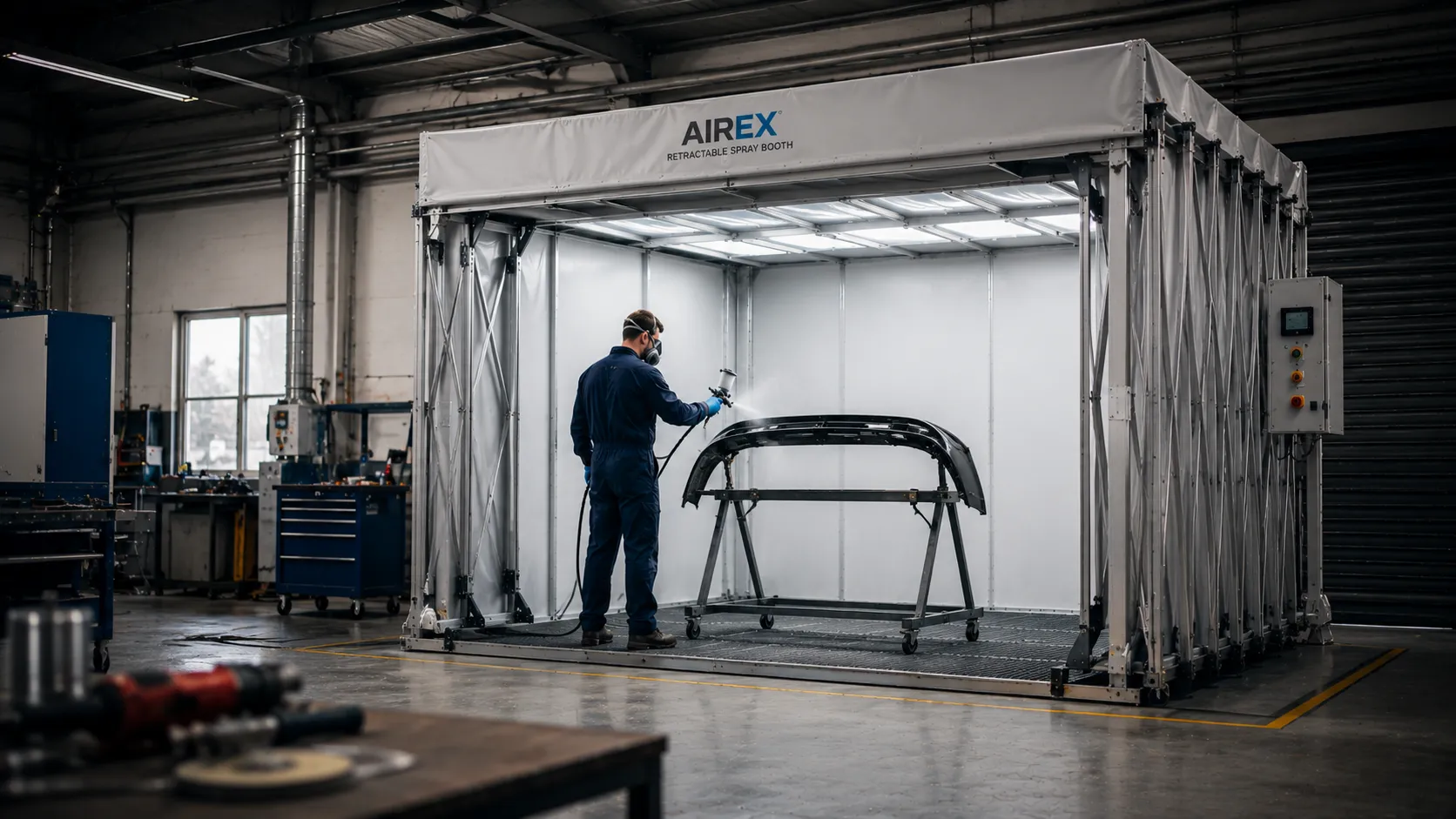
Retractable Spray Booths are temporary or semi-permanent enclosures designed for spray painting operations. Unlike fixed spray booths, these systems collapse or slide away after use. Most units operate on overhead tracking systems. This allows operators to extend or retract the booth within minutes.
The design suits businesses handling irregular workloads. Workshops can create dedicated spraying zones only when required. That improves floor efficiency and reduces wasted operational space. Many systems support vehicles, machinery, steel fabrications, and industrial components.
Several industries now use retractable systems regularly:
Automotive repair centres.
Commercial vehicle workshops.
Aerospace maintenance facilities.
Agricultural equipment manufacturers.
Heavy engineering companies.
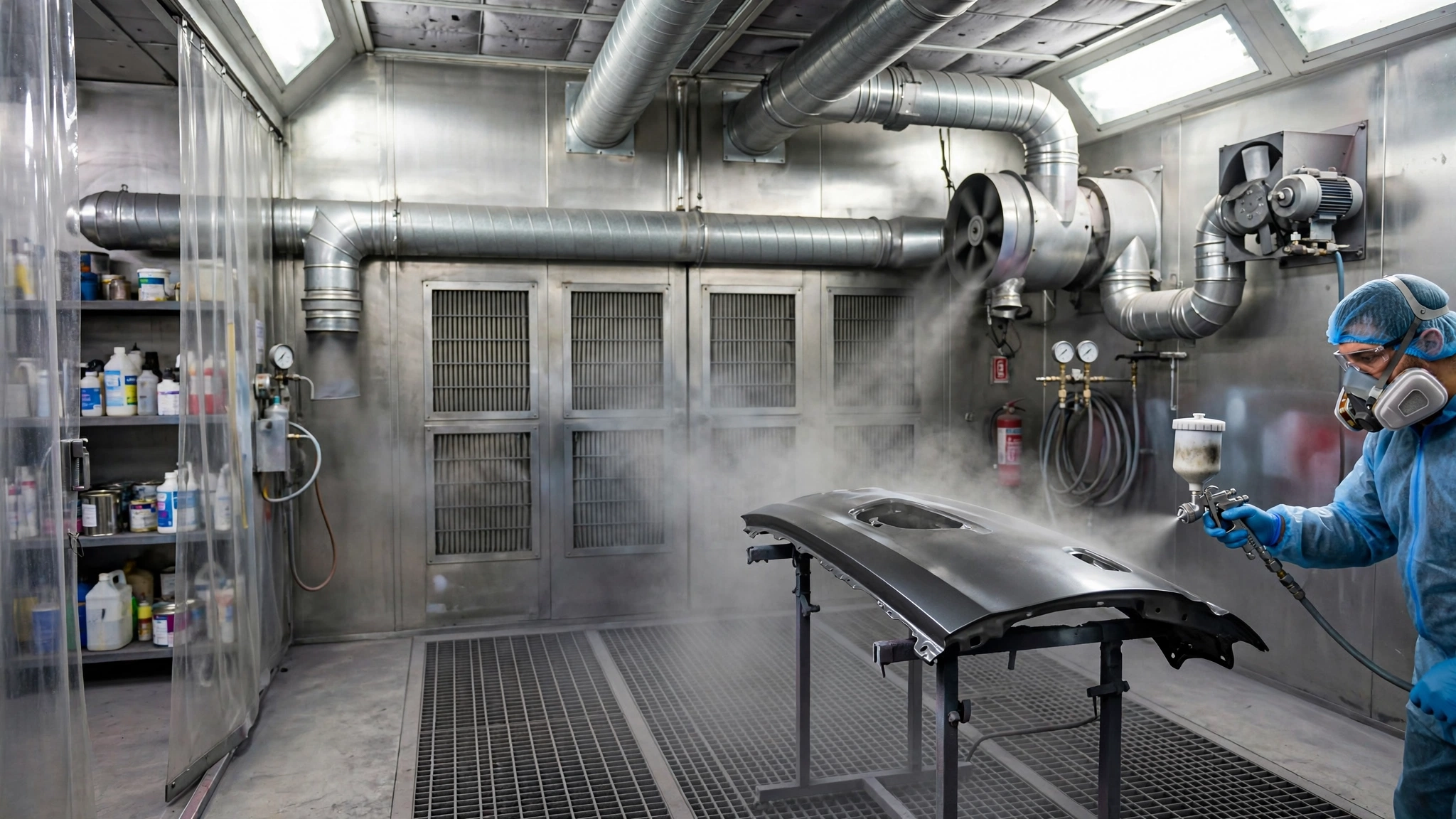
Most Retractable Spray Booths include fire-retardant curtain materials. Many also feature integrated LED lighting and extraction systems. Advanced units may include heated airflow technology for faster curing times. These additions improve paint quality and operator safety. Discover more in our Paint Mixing Room Design section.
Modern retractable systems use durable industrial materials designed for repeated movement. Galvanised steel frames resist corrosion in demanding workshop environments. PVC curtains often feature anti-static and flame-resistant coatings. This improves durability and regulatory compliance.
The table below highlights common booth components and their functions.
| Component | Purpose | Common Material |
|---|---|---|
| Support Frame | Structural stability | Galvanised steel |
| Curtain Walls | Containment and overspray control | Fire-retardant PVC |
| Extraction Unit | Removes fumes and particles | Steel housing |
| Filtration System | Captures airborne contaminants | Multi-stage filters |
| Lighting System | Improves visibility | LED fixtures |
| Track Mechanism | Allows booth movement | Aluminium or steel |
These components work together to create safe and efficient spray environments. The modular structure also simplifies installation and future expansion.
Retractable Spray Booths provide major space-saving advantages for industrial facilities. Fixed booths occupy permanent floor areas regardless of production schedules. Retractable systems eliminate this problem by folding away after use.
This flexibility improves workflow management across busy workshops. Staff can move machinery or vehicles freely when painting operations finish. Many businesses gain extra assembly or repair space without building extensions. That reduces capital expenditure significantly.
Several practical benefits support daily operations:
Faster workspace reconfiguration.
Improved production flow.
Reduced facility congestion.
Better equipment accessibility.
Lower building modification costs.
Smaller workshops benefit particularly from retractable systems. Many urban facilities operate within restricted industrial units. Every square metre becomes valuable in these environments. Flexible booth layouts help maximise operational capacity without relocation costs.
Retractable Spray Booths usually cost less than permanent spray booth installations. Fixed systems often require substantial structural alterations and concrete work. Retractable models typically need fewer building modifications.
Installation times are also shorter. Some systems become operational within several days. This minimises disruption to workshop productivity. Businesses avoid lengthy shutdown periods common with permanent construction projects.
Maintenance requirements remain relatively straightforward. Curtain panels can often be replaced individually. Track systems usually need simple lubrication and inspection schedules. Many extraction units use accessible filter compartments for quicker servicing.
Energy efficiency provides another financial advantage. Operators only activate the booth during spraying operations. This reduces ventilation and heating expenses compared with continuously operating fixed systems.
Retractable Spray Booths now serve many industrial sectors across the UK. Automotive refinishing remains one of the largest markets. Commercial vehicle operators also use these systems extensively for fleet maintenance.
Manufacturing businesses increasingly adopt retractable booths for component finishing. Aerospace firms value flexible paint environments for large aircraft sections. Rail maintenance facilities also use retractable systems for carriage refurbishment projects.
Heavy engineering businesses benefit from scalable booth sizes. Some retractable systems extend beyond 20 metres in length. That allows operators to paint oversized equipment efficiently.
Typical applications include:
Vehicle refinishing.
Industrial machinery coating.
Metal fabrication and painting.
Aerospace component finishing.
Protective coating applications.
Industrial spray painting involves strict health and safety regulations. Retractable Spray Booths must support safe airflow management and contaminant control. Proper extraction systems reduce worker exposure to hazardous fumes and overspray.
UK businesses commonly follow COSHH regulations for paint operations. Booth systems often include multi-stage filtration technology. This captures airborne particles before releasing air externally.
Many modern booths also support environmental compliance targets. High-efficiency filters reduce particulate emissions significantly. LED lighting lowers power consumption compared with older fluorescent systems.
Workshop managers should assess several compliance factors before installation:
Airflow performance levels.
Filter efficiency ratings.
Fire safety certification.
Ventilation capacity.
Lighting compliance standards.
Proper system selection helps businesses maintain safe and productive spray environments.
Choosing suitable Retractable Spray Booths requires careful operational planning. Businesses should first assess available floor space and production requirements. Oversized systems may reduce efficiency instead of improving it.
Extraction performance remains one of the most important considerations. Effective airflow maintains paint quality and worker safety. Workshops handling high paint volumes often need stronger extraction systems.
Heating options also influence operational performance. Heated airflow systems accelerate drying times during colder months. This improves throughput and reduces delays in busy workshops.
Key buying considerations include:
Workshop dimensions.
Type of coatings used.
Extraction capacity.
Lighting quality.
Heating requirements.
Frequency of booth use.
Maintenance accessibility.
Businesses should also consider future expansion plans. Modular retractable systems allow easier upgrades when production increases.
Retractable Spray Booths provide an effective solution for industrial businesses facing space limitations and changing production demands. Their flexible designs allow workshops to maximise floor efficiency without compromising safety or paint quality. Many industries now rely on these systems to support faster operations and improved workspace management.
The ability to retract the enclosure after use creates valuable operational flexibility. Workshops gain additional working space for repairs, assembly, or equipment movement. Lower installation costs and reduced maintenance requirements also make these systems financially attractive for many businesses.
Modern Retractable Spray Booths continue evolving with improved extraction systems, energy-efficient lighting, and advanced filtration technologies. These developments help companies maintain compliance with workplace safety standards while improving productivity.
As industrial facilities seek smarter space management solutions, retractable booth systems will likely remain a strong investment. Their balance of flexibility, efficiency, and practicality makes them well-suited for modern industrial environments.
We provide reliable spray booth installation, repair, and maintenance services designed to improve performance, safety, and efficiency. Our experienced team delivers quality solutions tailored to industrial and commercial needs.