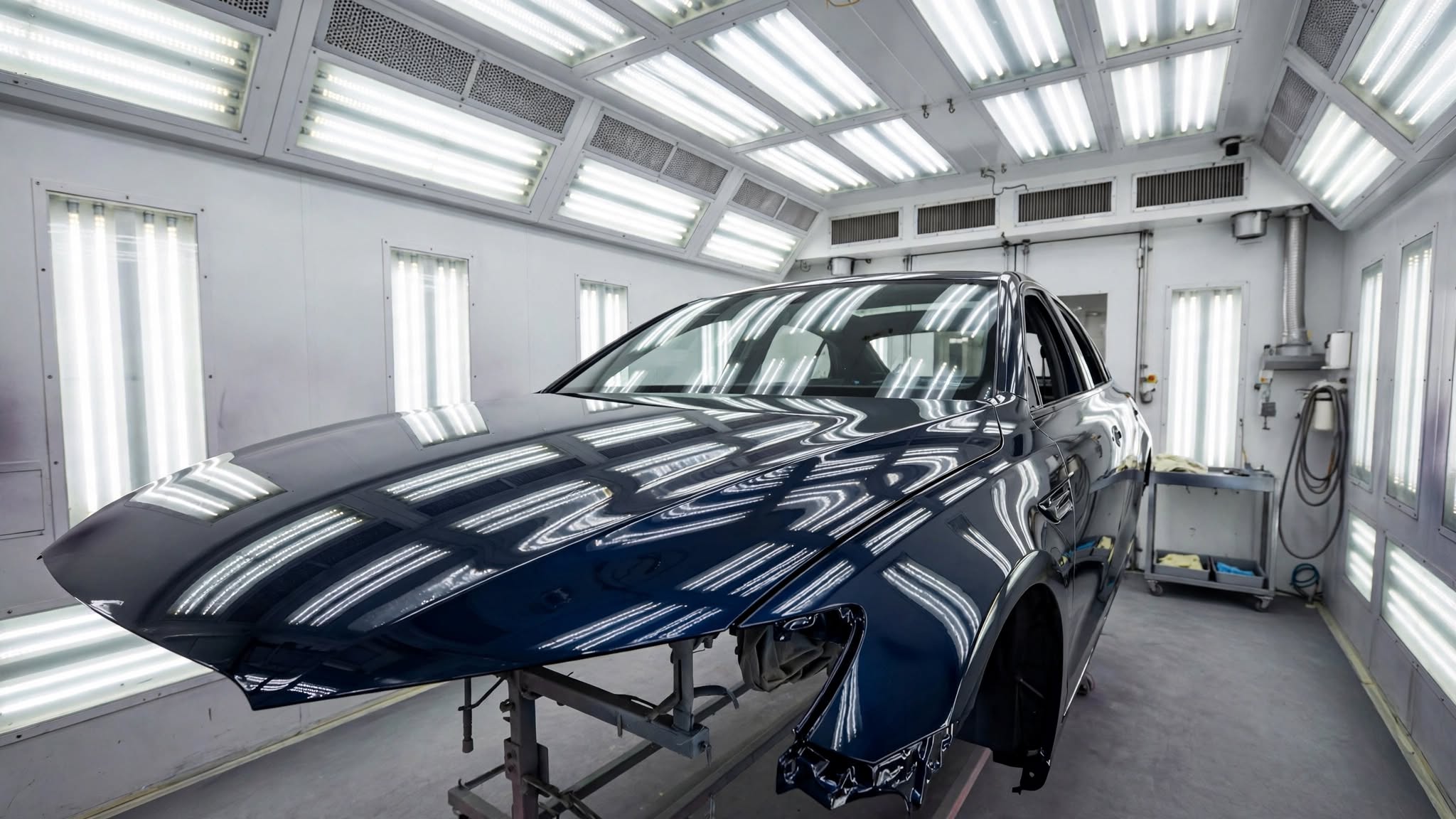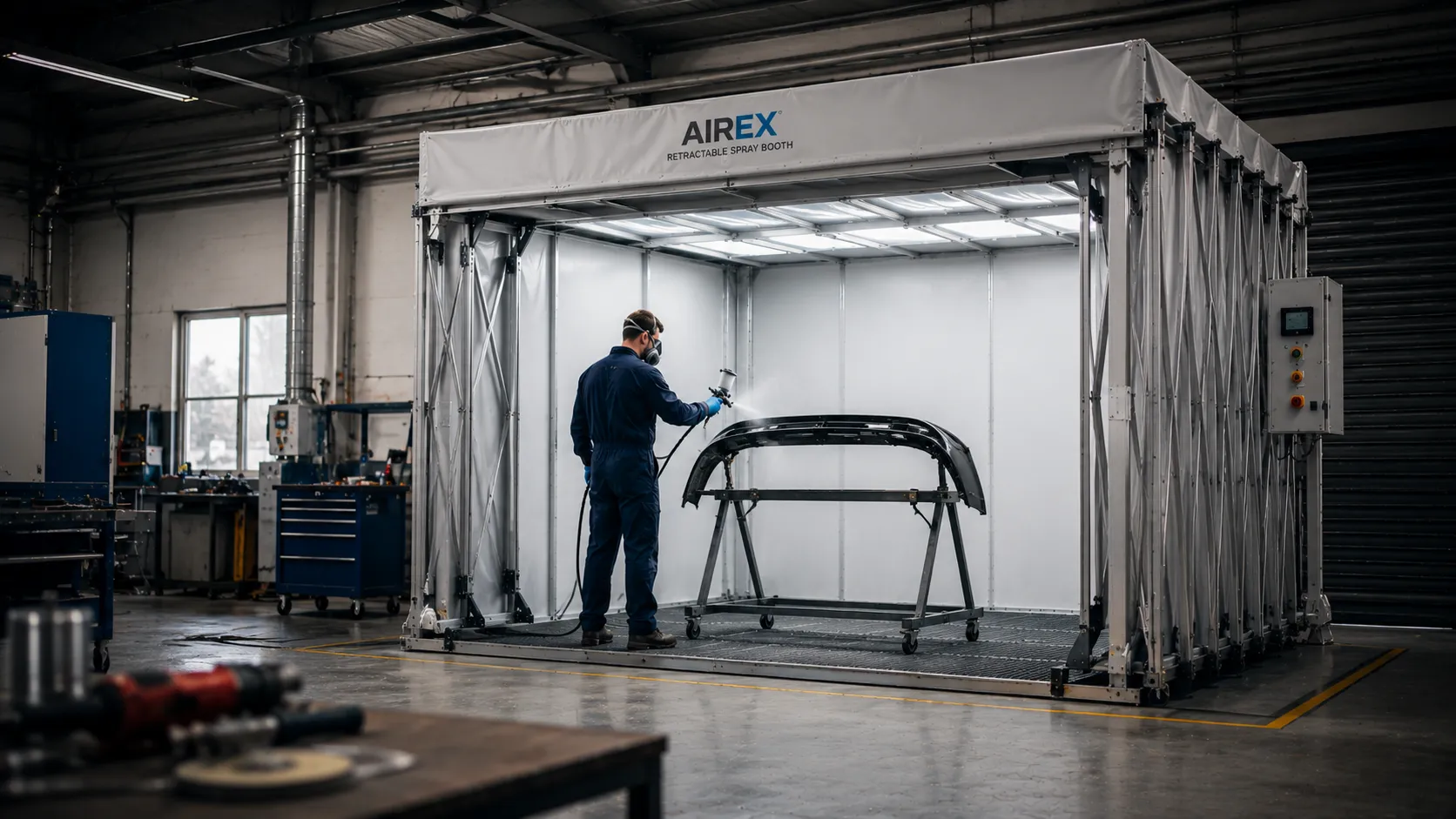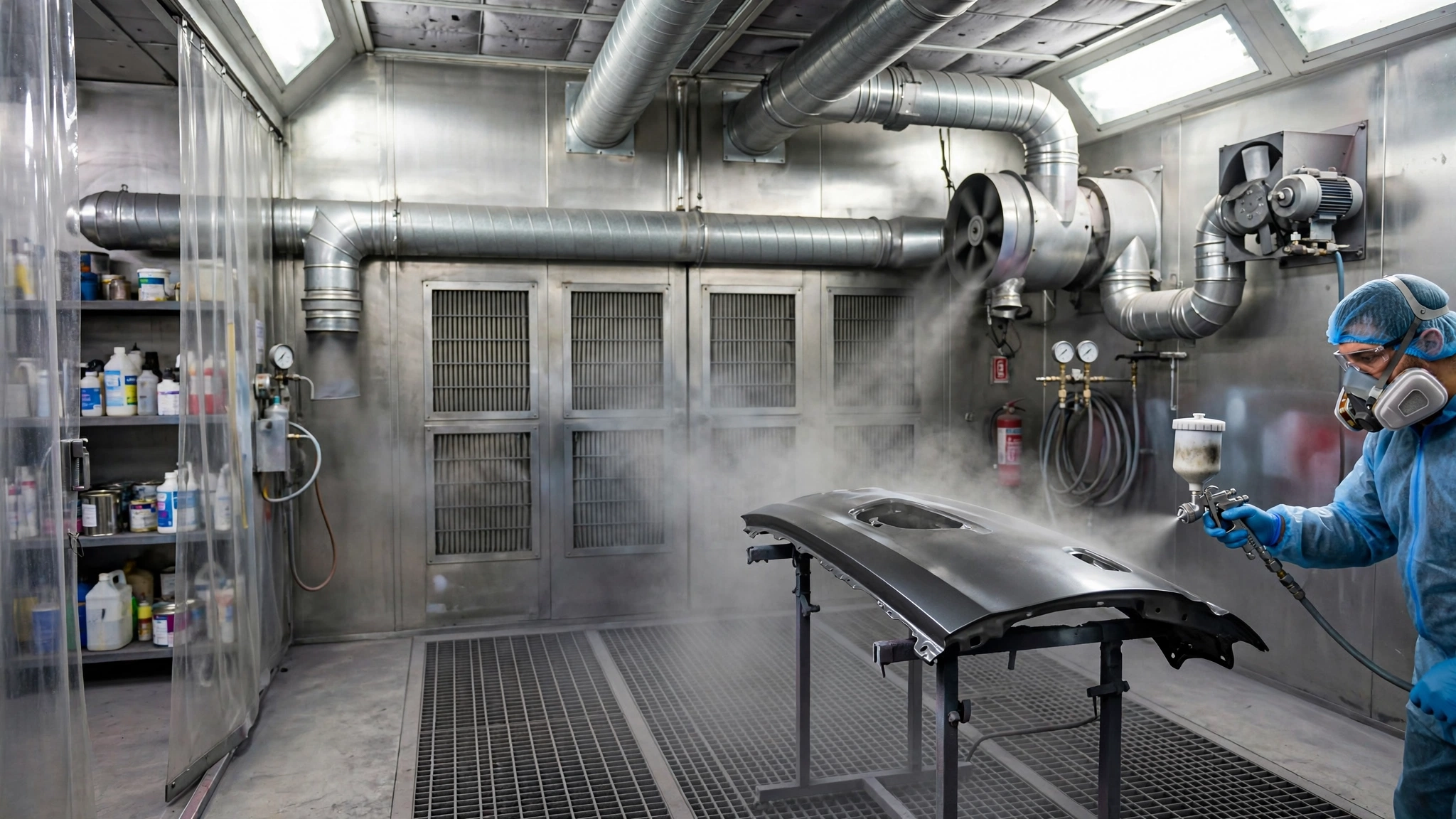
Spray Booth Extraction Systems play a critical role in creating a safe, productive, and compliant finishing environment. Every spray operation releases overspray, fumes, and volatile organic compounds (VOCs) into the air. Without proper airflow, these contaminants reduce coating quality and increase health risks. We rely on well-designed extraction systems to maintain clean air, consistent finishes, and regulatory compliance.
Airflow influences every stage of the spray painting process. It controls overspray removal, supports even coating application, and protects workers from hazardous airborne particles. Industry organizations such as OSHA and NFPA emphasize proper ventilation because poor air movement increases exposure risks and fire hazards. Understanding how Spray Booth Extraction Systems work helps businesses improve efficiency while reducing maintenance costs.
Spray Booth Extraction Systems remove contaminated air while introducing clean replacement air. This continuous air exchange prevents overspray from settling on painted surfaces. It also reduces the concentration of combustible vapors inside the booth.
A balanced airflow system keeps the spray environment stable throughout production. Manufacturers design extraction systems to maintain consistent air velocity across the work area. OSHA recommends maintaining proper ventilation to reduce worker exposure to hazardous airborne contaminants. Consistent airflow also improves coating adhesion and minimizes surface defects.
Every extraction system includes several essential components that work together efficiently.
| Component | Primary Function | Benefit |
|---|---|---|
| Intake filters | Capture incoming dust | Cleaner paint finish |
| Exhaust filters | Remove overspray particles | Cleaner exhaust air |
| Extraction fan | Moves contaminated air | Stable airflow |
| Ductwork | Directs air movement | Efficient ventilation |
| Control system | Monitors airflow | Better operational control |
Each component requires regular inspection and maintenance. Dirty filters reduce airflow, forcing fans to work harder and increasing operating costs.
Spray Booth Extraction Systems directly affect coating appearance. Proper airflow carries overspray away before particles settle on freshly painted surfaces. This process reduces defects such as dry spray, orange peel, and dust contamination.
Professional coating specialists agree that stable airflow creates more uniform paint thickness. Even airflow also allows painters to maintain consistent spray patterns. As a result, fewer parts require sanding, polishing, or repainting.
Key benefits of proper airflow include:
Reduced overspray contamination.
Improved paint transfer efficiency.
Faster drying conditions.
Better finish consistency.
Lower paint waste.
Reduced rework costs.
These improvements increase production efficiency while maintaining high-quality finishing standards.
Spray Booth Extraction Systems protect employees by removing hazardous airborne particles and solvent vapors. Many industrial coatings contain chemicals that may affect respiratory health during prolonged exposure. Effective ventilation reduces airborne concentrations before workers inhale them.
Organizations, including OSHA and the American Conference of Governmental Industrial Hygienists, recommend proper engineering controls before relying on personal protective equipment. Well-designed extraction systems help companies meet occupational safety requirements while improving workplace comfort.
Many solvent-based coatings release flammable vapors during spraying. Without sufficient airflow, vapor concentrations can increase rapidly. Proper extraction prevents dangerous accumulation by continuously exhausting contaminated air.
NFPA standards require spray booths to maintain safe ventilation and use explosion-protected equipment where appropriate. Regular airflow testing confirms that Spray Booth Extraction Systems continue operating within design specifications. Preventive maintenance significantly reduces unexpected failures and safety incidents.
Airflow performance changes over time as filters become clogged and equipment wears. Routine inspections help identify restrictions before they affect production quality. Many facilities measure face velocity using calibrated airflow meters to verify system performance.
Maintenance teams should monitor airflow during scheduled inspections instead of waiting for visible performance issues. Small airflow reductions often lead to larger coating defects and increased energy consumption if left unresolved.
Recommended maintenance practices include:
Replace filters according to manufacturer schedules.
Inspect fans for vibration and wear.
Check ductwork for leaks.
Verify airflow using calibrated instruments.
Clean overspray buildup regularly.
Document inspection results for compliance.
These practices extend equipment life while maintaining reliable extraction performance.
Not every operation requires the same airflow configuration. Production volume, coating type, booth size, and workpiece dimensions all influence system selection. Downdraft booths generally provide the most uniform airflow for automotive refinishing, while crossdraft systems often suit smaller industrial applications.
Working with experienced ventilation engineers ensures Spray Booth Extraction Systems meet operational requirements and applicable safety standards. A properly sized system lowers long-term operating costs while supporting higher productivity and better environmental performance.
Spray Booth Extraction Systems provide far more than ventilation. They improve finish quality, protect worker health, reduce fire risks, and support regulatory compliance. Investing in proper airflow design and regular maintenance delivers measurable operational benefits, lower production costs, and consistently higher-quality finishing results across industrial painting operations.
We provide reliable spray booth installation, repair, and maintenance services designed to improve performance, safety, and efficiency. Our experienced team delivers quality solutions tailored to industrial and commercial needs.