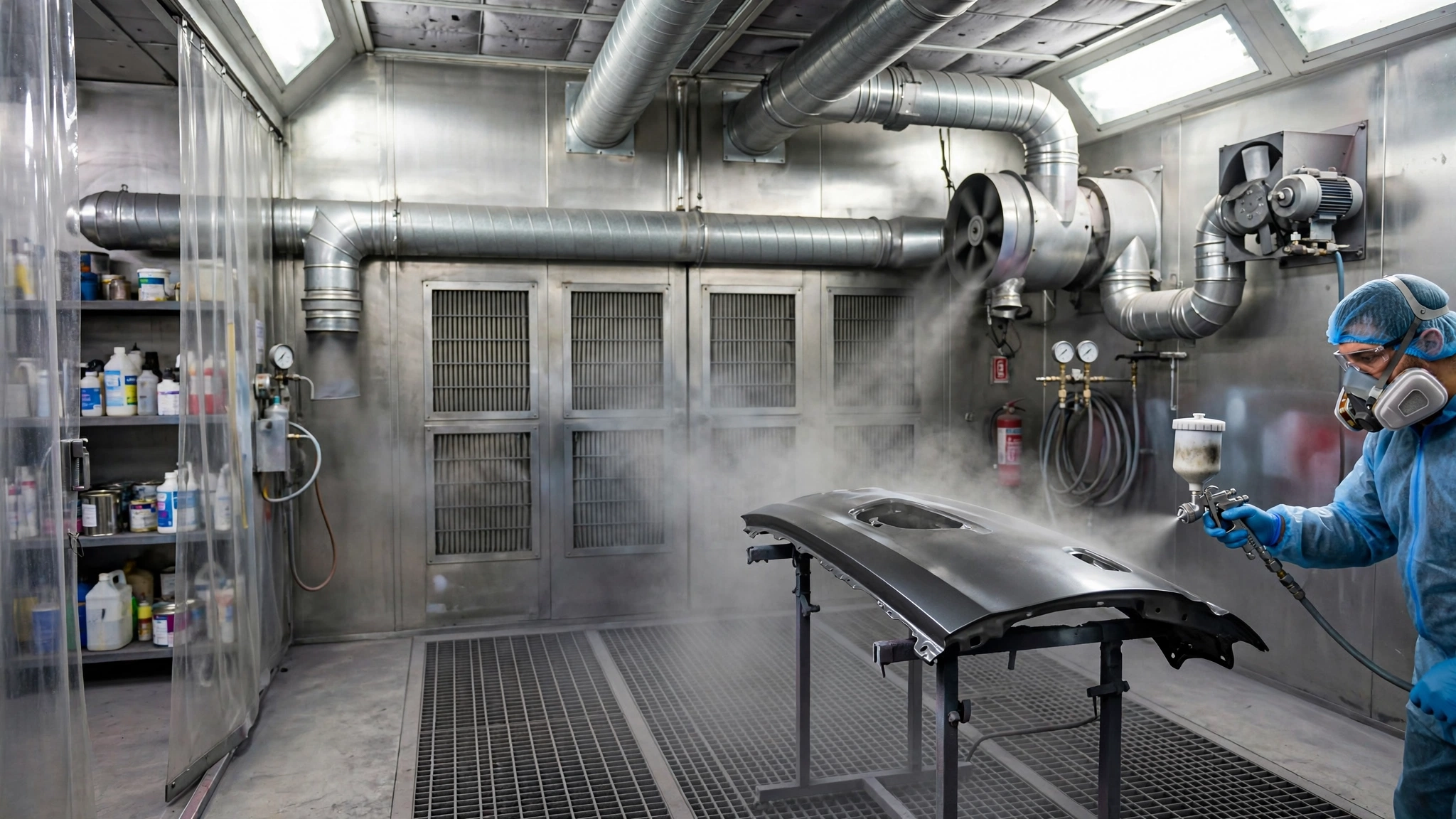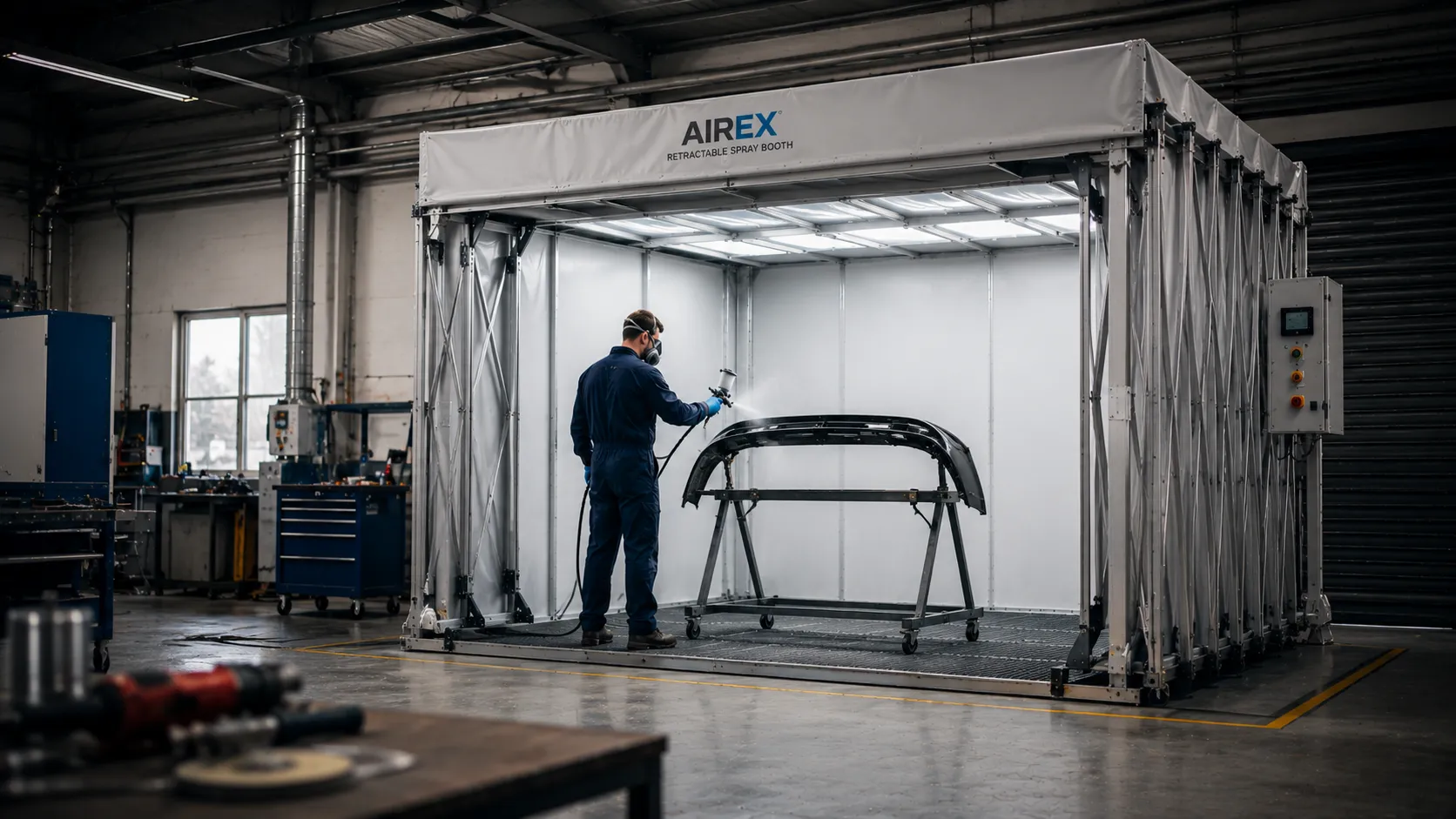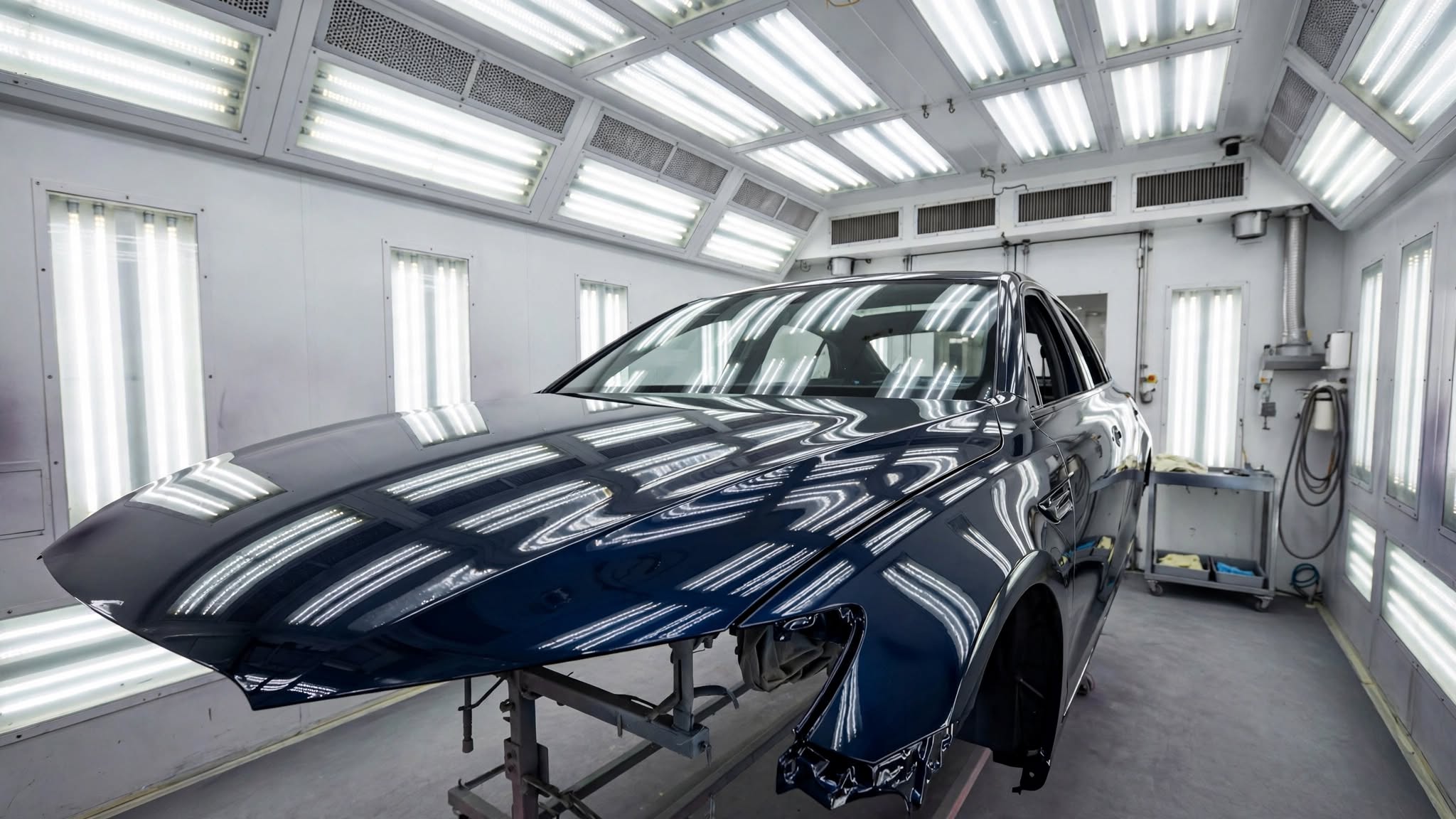
Good paintwork depends on more than spray technique and coating quality. What the painter can see during preparation, application, and inspection has a direct effect on how accurately the job can be completed. That makes spray booth lighting an important part of the painting environment.
Proper illumination helps painters notice surface defects, judge coverage, maintain consistent passes, and inspect the finish before the vehicle or component leaves the booth. Poor lighting can hide problems until the coating has dried, when correcting them may require additional sanding, preparation, and repainting.
Painting requires constant visual judgment. During a spray pass, the painter needs to see where the coating has already been applied, whether adjacent passes overlap correctly, and how the wet surface is developing.
If parts of the booth are too dark or unevenly illuminated, judging these details becomes harder. Shadows can make one area appear properly covered while another receives too much or too little material.
Effective spray booth lighting creates a clearer view of the work surface. It does not replace proper equipment, surface preparation, airflow, or painter skill, but it makes those elements easier to manage consistently.
One of the main benefits of good paint booth illumination is improved visibility during application.
Painters often watch the appearance of the wet coating as they move across a panel. Adequate lighting makes it easier to follow the wet edge and identify areas where coverage differs.
This is particularly useful on large panels, curved surfaces, corners, and recessed areas. These shapes can reflect light differently, making it difficult to judge the coating under weak or poorly positioned fixtures.
Consistent lighting can also help reveal areas that need attention before the coating begins to set. A painter may notice an incomplete pass around an edge, a lightly covered section, or a difference in surface appearance while there is still an opportunity to respond appropriately.
The goal is not simply to make the booth brighter. Light should be distributed so the painter can view the work from different positions without large dark zones or distracting glare.
Paint finish quality starts before the spray gun is used. Small preparation defects can remain visible through the final coating, so identifying them early matters.
Good spray booth lighting can make it easier to spot:
Inspection lighting is also useful after application. Runs, sags, dry-looking areas, dust particles, and other visible imperfections may become more noticeable when the surface is viewed from several angles under consistent illumination.
Booth cleanliness and filtration also affect what ultimately lands on the painted surface. For related maintenance guidance, How Often Should Spray Booth Filters Be Changed? explains another part of maintaining suitable booth conditions.
Brightness is only one consideration when evaluating spray booth lighting. The way a light source renders colors also matters.
A coating can appear slightly different under different types of illumination. If the booth lighting distorts certain tones, judging color consistency or identifying subtle differences between adjacent surfaces becomes more difficult.
For refinishing work, painters may need to compare the newly coated area with an existing finish. Lighting that allows colors to appear naturally gives the painter a more useful visual reference during application and inspection.
Color temperature also influences how a surface looks. The important point is consistency. Large differences between fixtures or areas of the booth can make the same paint appear different depending on where the painter is standing.
Even powerful lights can produce poor working conditions when they are positioned incorrectly.
Fixtures placed along booth walls and ceilings can illuminate surfaces from multiple directions. This arrangement helps reduce shadows created by the painter, spray equipment, vehicle panels, or other objects inside the booth.
Glare needs attention as well. Highly reflective wet coatings can bounce intense light toward the painter, making details harder to see rather than easier. Effective booth lighting balances sufficient illumination with fixture positioning that supports comfortable viewing from normal working angles.
Keeping light fixtures clean is equally important. Overspray, dust, and residue on protective covers can gradually reduce usable light and change how evenly the booth is illuminated.
The final inspection is where lighting becomes especially valuable. A finish that looks acceptable in one viewing position may reveal imperfections when examined from another angle.
Painters can use consistent booth lighting to examine reflections across the surface and look for changes in texture or appearance. Moving around the painted object rather than inspecting it from one fixed position provides a more complete view.
This visual inspection can help identify issues that should be addressed before the job moves to the next stage.
Lighting performance can change over time, even when the original booth design is suitable. Routine checks should therefore include the lighting system.
Dirty fixture covers should be cleaned according to the booth and fixture manufacturer’s procedures. Damaged components should be addressed, and noticeable differences in illumination between areas should be investigated. Any replacement fixture or component also needs to be appropriate for the specific spray booth and its operating environment.
It is useful to evaluate lighting from the painter’s normal working positions rather than judging it only by looking at the fixtures themselves. What matters is how clearly the actual work surface can be seen.
Spray booth lighting contributes to paint finish quality by giving painters a clearer and more consistent view throughout preparation, application, and inspection. Proper illumination helps reveal surface defects, makes coating coverage easier to judge, supports color evaluation, and improves visibility of the finished surface.
Brightness alone is not enough. Light distribution, fixture placement, glare control, color appearance, and regular maintenance all affect how useful the lighting is in practice. When these factors are managed alongside airflow, filtration, preparation, and correct spraying technique, the booth provides a better environment for producing consistent paint finishes.
We provide reliable spray booth installation, repair, and maintenance services designed to improve performance, safety, and efficiency. Our experienced team delivers quality solutions tailored to industrial and commercial needs.