Spray booth filters play a central role in controlling airflow, capturing overspray, and helping maintain a cleaner environment for painting and finishing work. As filters collect dust, paint particles, and other contaminants, their resistance to airflow gradually increases. If they remain in service for too long, booth performance can decline and the quality of the finished work may suffer.
So, how often should spray booth filters be changed? There is no single replacement interval that applies to every booth. Filter type, paint volume, operating hours, booth design, and working conditions all affect how quickly a filter becomes loaded. Instead of relying only on a calendar, operators should combine routine inspections with airflow and pressure monitoring.
A spray booth depends on controlled air movement. Incoming air needs to be clean enough to reduce contamination, while exhaust air must pass through filters designed to capture overspray before leaving the booth.
As filters become loaded, they can restrict airflow. This may affect booth balance and make it more difficult to maintain consistent working conditions. A heavily contaminated filter can also increase the burden on the ventilation system.
Regular spray booth filter replacement therefore supports several practical goals: maintaining airflow, reducing contamination, protecting ventilation components, and creating more consistent conditions for paint application.
There is no universal schedule such as changing every filter once a month or after a fixed number of jobs. A booth used continuously for high-volume coating work will generally load filters faster than one used occasionally.
The appropriate replacement point should be based on the booth manufacturer’s recommendations, the filter manufacturer’s guidance, visual inspection, and the booth’s pressure or airflow indicators where available.
A maintenance schedule can establish inspection intervals, but actual filter condition should determine when replacement is necessary. This approach avoids both changing usable filters unnecessarily and leaving overloaded filters installed for too long.
Intake filters help remove airborne dust and debris before air enters the spray area. Their condition can have a direct effect on cleanliness inside the booth.
Dusty surroundings, nearby production processes, open doors, and general facility conditions can cause intake filters to load more quickly. Operators should inspect them regularly for visible contamination, damage, or signs that airflow is becoming restricted.
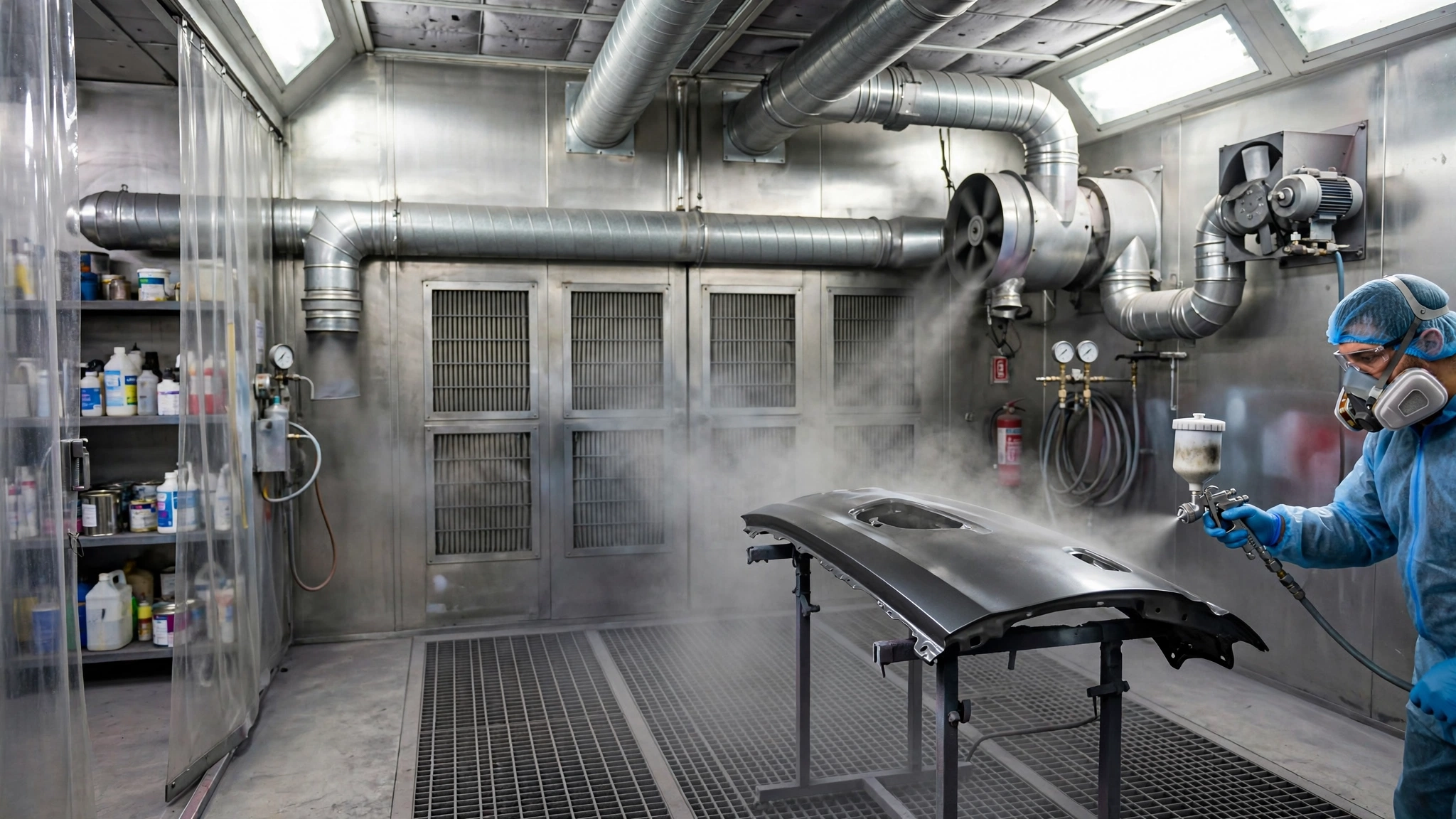
Exhaust filters capture paint overspray as air leaves the booth. Because they are exposed directly to coating particles, their loading rate can vary considerably according to production activity.
High spray volumes, coating characteristics, transfer efficiency, and spraying technique can all influence how quickly exhaust filters become saturated. Visible paint buildup is important, but pressure changes and airflow performance may reveal restriction before the filter appears completely covered.
Some spray booths use multiple filtration stages or specialized filters depending on the application and booth design. These filters should not automatically be placed on the same replacement schedule.
Each stage performs a different function and may accumulate contaminants at a different rate. Maintenance procedures should identify each filter separately and specify how its condition is checked.
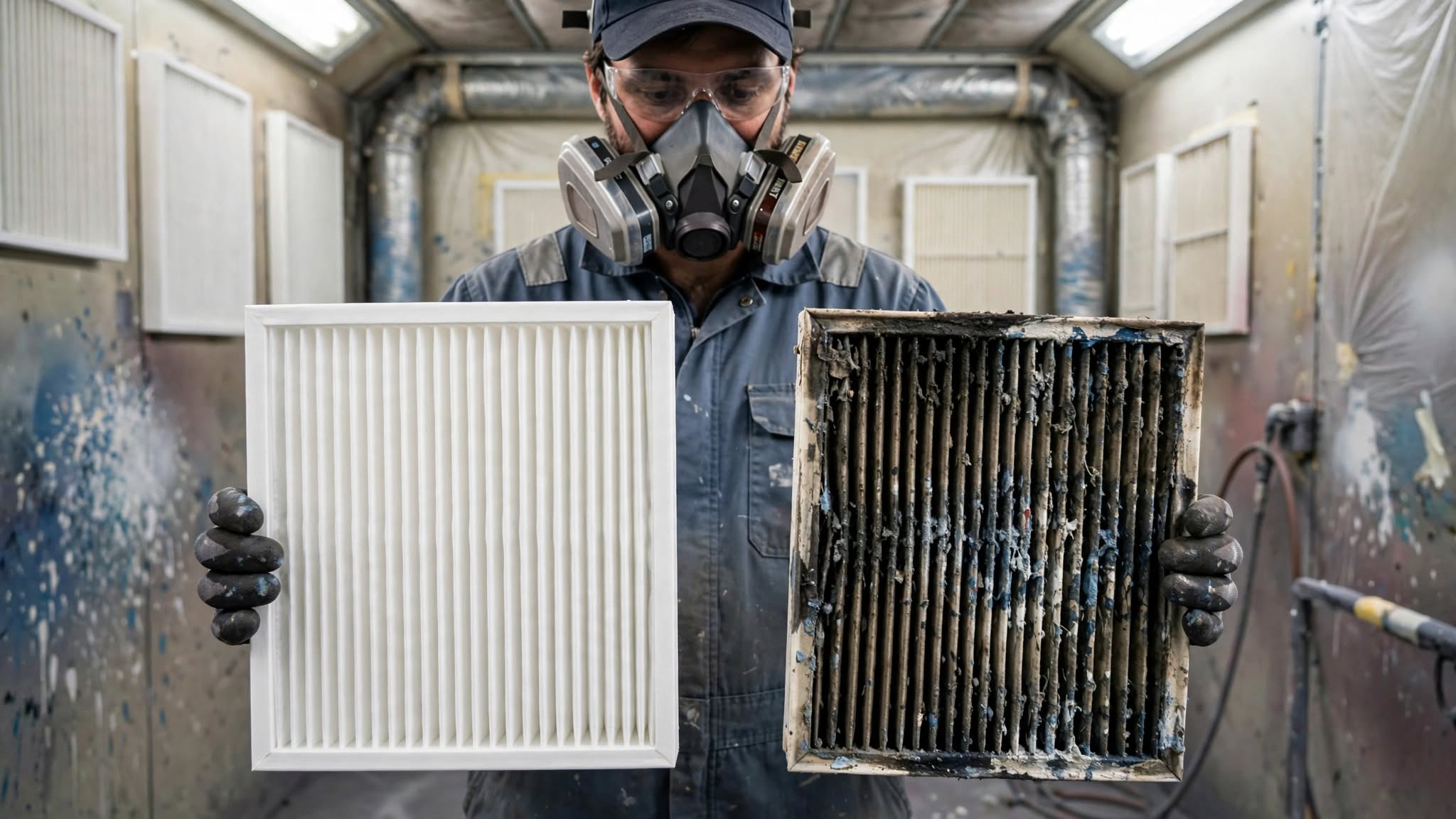
Waiting for a filter to look completely blocked is not a reliable maintenance strategy. Several warning signs can indicate that inspection or replacement is needed.
These may include:
Noticeably reduced or uneven airflow
Increased pressure differential across the filters
Heavy visible overspray or dust accumulation
More airborne contamination inside the booth
Changes in normal booth ventilation behavior
Filters that are damaged, sagging, or incorrectly seated
Some of these symptoms can also result from problems elsewhere in the ventilation system. For that reason, replacing filters should be part of a broader inspection rather than an automatic response to every airflow issue.
A booth operating throughout the working day will normally expose its filters to more contaminants than a booth handling occasional jobs. Production changes should therefore trigger a review of the existing inspection schedule.
Different coatings and spray processes generate different amounts and types of overspray. Spray gun setup, operator technique, and the size of the parts being coated can also affect filter loading.
Intake filter life depends partly on the environment outside the booth. Dust from sanding, grinding, vehicle movement, construction work, or other nearby operations can increase contamination.
Using the correct filter for the booth is essential. A filter with unsuitable dimensions or characteristics may not perform as intended. Poor installation can also allow air to bypass the filtration media.
Replacement filters should therefore match the specifications required for the particular booth and filtration stage.
Visual inspection is useful, but it does not provide a complete picture of filter condition. Where a spray booth includes a pressure differential gauge or other monitoring system, operators should use it as part of routine maintenance.
The pressure difference across a filter changes as contamination accumulates and airflow resistance increases. The appropriate replacement threshold depends on the booth and filter specifications rather than a universal number.
Maintenance staff should know the normal operating range for their equipment and investigate significant changes instead of relying solely on elapsed time.
A simple maintenance record can make filter replacement more consistent. Record when filters are installed, when they are inspected, their observed condition, relevant pressure readings, and when replacement occurs.
Over time, these records can reveal patterns. For example, a workshop may discover that exhaust filters load more quickly during certain types of projects or that intake filters require additional attention during dusty production periods.
Replacement should also include checking the filter frame, seals, surrounding surfaces, and installation direction where applicable. Installing a new filter incorrectly can undermine the purpose of replacing it.
The answer to how often spray booth filters should be changed depends on actual operating conditions rather than a fixed calendar interval. Booth usage, filter type, coating processes, surrounding air quality, airflow, and pressure differential all influence filter service life.
A practical approach combines scheduled inspections with condition-based maintenance and manufacturer guidance. By monitoring each filtration stage and keeping basic maintenance records, operators can replace filters when necessary while supporting consistent airflow, cleaner working conditions, and reliable spray booth operation.
We provide reliable spray booth installation, repair, and maintenance services designed to improve performance, safety, and efficiency. Our experienced team delivers quality solutions tailored to industrial and commercial needs.